
How a Retaining Wall Turns a Problem Into a Design Opportunity in Ashland, MA
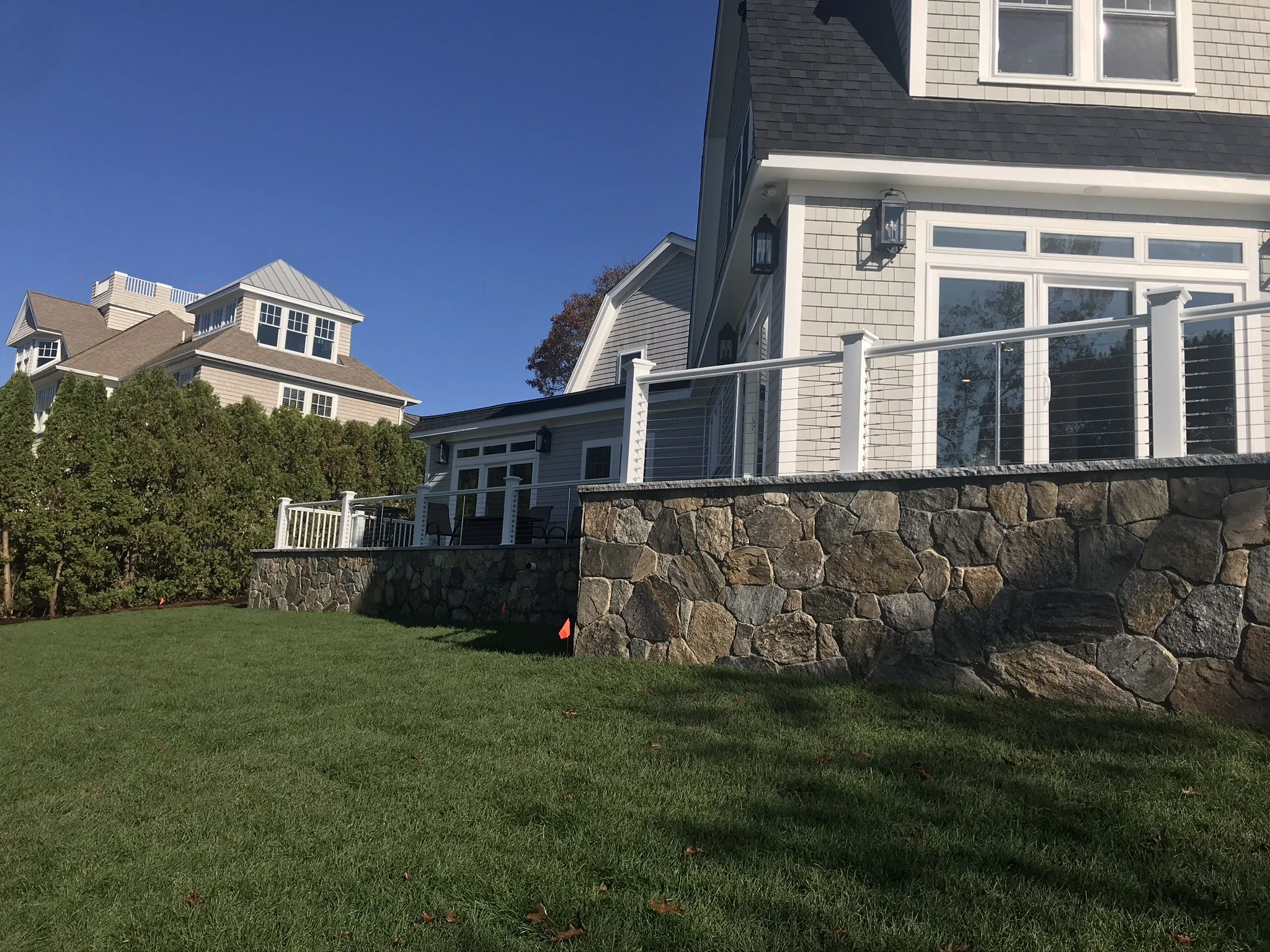
Not every property is flat. In the towns west of Boston, where the terrain rolls through wooded lots and slopes toward ponds, streams, and wetland edges, grade changes are part of the landscape. Some are subtle. Others are significant enough to dictate how the entire backyard functions.
A slope that drops three feet across a thirty-foot span does not just affect where you can build a patio. It affects drainage. It affects access. It affects sightlines from the house. And it affects whether the outdoor space feels usable or feels like you are constantly walking uphill or downhill just to get to the part of the yard you actually want to be in.
That is where a retaining wall enters the conversation. Not as a decorative accent. Not as an afterthought. But as the structural element that transforms an uncooperative grade into a landscape that works.
Related: Elevate Your Landscape With a Custom Retaining Wall in Norfolk, MA, & Westwood, MA
The Problem Most Homeowners Do Not Realize They Have
Many properties in Ashland, Needham, Newton, Wellesley, Dover, Sherborn, and Weston were built on terrain that was graded just enough to support the house and the driveway. The backyard was left more or less as it was. The builder moved on. The homeowner moved in. And for years, the slope in the backyard was just the slope in the backyard.
Then a project comes along. A patio. A pool. An outdoor kitchen. A new planting bed. And suddenly the grade is not just a feature of the lot. It is the obstacle standing between the homeowner and the outdoor space they want.
Water runs downhill and pools where it should not. The patio site requires more excavation than expected. The planting beds on the slope erode after every heavy rain. The yard feels disconnected because one section is three or four feet higher than the next with no clean transition between them.
A retaining wall solves every one of these problems. It holds the soil in place. It creates level surfaces where the grade would not allow them. It redirects water. And when it is designed as part of the larger landscape, it becomes one of the most visually impactful elements on the property.
What a Retaining Wall Actually Does
At its most basic, a retaining wall is a structure that holds soil on one side at a higher elevation than the other. It resists the lateral pressure of the earth behind it and prevents the slope from moving, eroding, or collapsing.
But that description sells it short.
In practice, a well-designed retaining wall does several things at once. It creates usable flat space on a property where the grade would otherwise prevent it. It manages water by directing surface runoff away from structures, patios, and plantings. It defines the boundaries between different zones of the landscape, creating visual separation between a lawn area and a garden, between a patio and a slope, or between a pool deck and the wooded perimeter of the lot.
On properties in this part of Massachusetts, where lot sizes are generous but the terrain is rarely uniform, retaining walls are often the element that makes the rest of the landscape possible. Without them, the patio would need to be smaller. The pool would need to be moved. The planting beds would wash out. The outdoor kitchen would not have a level surface to sit on.
The wall is not the feature people notice first. But it is the feature that everything else depends on.
Materials and What They Communicate
The material you choose for a retaining wall says something about the property. It sets a tone. And in neighborhoods where the homes carry a certain standard, the wall needs to meet that standard.
Natural stone is the most traditional choice in this region. Fieldstone and granite are both abundant in New England, and walls built from these materials carry a sense of permanence and weight that fits the character of the older estates and the newer builds that draw from that same architectural language. Natural stone walls can be dry laid for a more rustic, organic appearance or mortared for a tighter, more formal look.
Manufactured block systems offer a different set of advantages. They are engineered for structural consistency, which matters on taller walls or walls that bear significant lateral pressure. They come in a range of colors and textures that can complement the home's exterior, the patio material, and the other hardscape elements on the property. And they install efficiently, which can reduce labor time on larger projects without compromising quality.
There are also hybrid approaches. A wall faced with natural stone veneer over a structural block core combines the aesthetic of stone with the engineering performance of a manufactured system. This is a common approach on estate level properties where the wall needs to look like it has been there for decades while performing to modern structural standards.
The right material depends on the height of the wall, the soil conditions behind it, the visual relationship to the house and the surrounding landscape, and the budget for the project. These are design decisions that should be made early, not selected from a catalog after the wall is already being built.
Related: 10 Ways a Retaining Wall Adds Style and Structure in Medfield & Ashland, MA
What Happens Behind the Wall Matters More Than What You See
The visible face of a retaining wall gets all the attention. The stone. The texture. The cap. The way it curves or steps along the grade. But the performance of the wall depends entirely on what is happening behind it.
Every retaining wall holds soil. And soil holds water. When it rains, the earth behind the wall becomes saturated, and that water creates hydrostatic pressure against the back of the wall. If that pressure is not managed, it will push the wall forward over time, cause cracking, bowing, and eventually failure.
The system that prevents this includes several components:
A compacted gravel base that distributes the weight of the wall evenly and provides a stable footing that resists settling
Drainage aggregate behind the wall, typically crushed stone, that allows water to move downward rather than building pressure against the back face
A perforated drain pipe at the base of the wall that collects the water moving through the aggregate and directs it to a discharge point away from the structure
Filter fabric between the drainage aggregate and the native soil to prevent fine particles from migrating into the gravel and clogging the drainage system over time
Proper backfill compaction in lifts as the wall is built up, which prevents settling behind the wall that can create voids, sinkholes, or uneven surfaces above
These elements are not optional. They are structural. A wall that looks beautiful on the surface but was not built with proper drainage and base preparation will fail. Not immediately. But within a few years, the signs will appear. A slight lean. A crack in the face. A section that settles lower than the rest. And by that point, the fix is not a repair. It is a rebuild.
What New England Winters Do to a Wall That Was Not Built for Them
In this part of Massachusetts, the freeze thaw cycle is one of the most destructive forces a retaining wall faces. Water that enters the soil behind the wall expands when it freezes. That expansion creates pressure. When the ground thaws, the water contracts and the pressure releases. Then it freezes again. And again. Over the course of a single winter, that cycle can repeat dozens of times.
A retaining wall that was built without adequate drainage behind it will absorb the full force of that cycle every year. The wall moves. The base shifts. The joints open. And over time, the wall loses its alignment and its structural integrity in ways that are expensive and disruptive to correct.
The frost depth in this region is typically 48 inches, which means the base of any structural wall needs to sit below that line or be engineered to accommodate frost movement. Walls built on shallow bases in New England are not built for New England. They are built to fail on a delayed timeline.
This is also why material selection matters beyond aesthetics. Natural stone that is porous will absorb moisture, and that moisture will freeze inside the stone, causing surface spalling and flaking over time. Dense granite and properly rated manufactured block resist this. The wall that looks perfect in September needs to survive March, and the material choice is a significant part of that equation.
How Grade Changes Create Design Opportunities
The irony of a difficult grade is that it often leads to a more interesting landscape than a flat lot ever would. A retaining wall that creates a level patio on a slope also creates a built in seating wall along the edge. A wall that terraces a hillside creates planting shelves that add depth, layering, and seasonal interest that a single plane garden bed cannot achieve. A wall that separates the pool deck from the lawn below creates a sense of enclosure and privacy that makes the pool area feel like its own room.
These are not compromises. They are design opportunities that exist because the grade demanded a creative solution.
On properties in Dover, Sherborn, Weston, and the surrounding towns where the lots back up to conservation land, wetland buffers, and wooded hillsides, the grade changes are often the most interesting feature of the site. A landscape that works with those changes rather than fighting them produces a result that feels natural, layered, and specific to the property in a way that a flat, open yard never could.
When the Wall Is Part of a Larger Project
The best retaining walls are not standalone projects. They are part of a larger landscape design that considers the wall in context with everything around it.
A retaining wall that supports a patio should be designed at the same time as the patio so the materials complement each other, the cap height aligns with the seating level, and the drainage behind the wall integrates with the drainage plan for the hardscape. A wall that borders a planting bed should account for the root zones of the plants that will be installed above and below it. A wall that sits near a pool should use materials that are compatible with the pool coping and decking so the space reads as one environment rather than a series of separate installations.
When the wall, the hardscape, the plantings, and the structures are designed together, the result is a landscape that feels cohesive and intentional. When they are designed separately and installed at different times by different teams, the result is a backyard that looks assembled. The difference is visible, and it is permanent.
The Wall You Build Now Is the One You Will Live With
A retaining wall is not a feature you replace every few years. It is a permanent structure. The stone or block you choose, the height, the curve, the cap detail, the way it integrates with the grade and the surrounding landscape, all of those decisions are locked in once the wall is built.
That is why the design conversation matters as much as the construction. The wall needs to solve the grade problem, manage the water, create the space you need, and look like it belongs on the property for the next thirty years. Getting all of that right requires someone who understands the site, the soil, the drainage, the materials, and the way the wall relates to every other element in the landscape.
If your property has a grade issue that is limiting how you use your outdoor space, or if you have a project in mind that will require structural support to work on your terrain, that is a good starting point for a conversation. Not about the wall itself, but about the landscape you want to build around it.
Related: The Art of Landscape Design for Wayland and Wellesley, MA Homes
About the Author
As a fourth-generation landscape and building construction professional, Peter Indresano grew up working for his father’s construction business. At just 14 years old, he worked 50 hours per week in the summers, which helped him develop his strong work ethic and uncompromising belief that a clean job is a happy job.